Physical AI in factories: planning a useful pilot
AI aims to help machines respond to changing conditions. A small, measurable trial can turn broad promises into practical requirements.
Choose one task and clear boundaries.
Simulate and inspect failure cases first.
Measure intervention and rework too.
The short answer
A part arrives at an angle, a sensor reports an unexpected condition, or the next batch looks different. Handling variation matters on a production line. In an October 6 article, Microsoft describes Physical AI as systems that perceive, make decisions and act. This is a provider’s perspective, rather than an independent comparison of factory equipment.
Where the idea becomes useful
A fixed routine expects known conditions. With changing parts, added perception could help if it reliably distinguishes permitted cases from situations needing human review. The boundary is as important as the flexibility the team wants.
Start the comparison with everyday work
Record how often the current process stops, who intervenes and how long recovery takes. Measure the same things in the pilot. Include setup, upkeep and restarting. A fast demonstration can otherwise promise more than a complete shift would deliver.
Feedback must help the operator
The operator should be able to see which part was recognised, why the process stopped and how to continue safely. In our example, a clear unfamiliar-part message would be more useful than a long generated explanation. These are editorial requirements, not product features we have tested.
Your practical comparison
What you need
One clearly scoped task, approved test data, a simulation or test environment, and qualified people responsible for operation and safety.
- Choose one workflow, such as sorting a small set of known parts.
- Define permitted actions, stopping conditions and human approvals.
- Test ordinary cases and variations in simulation first.
- Compare the existing approach and the candidate under the same conditions.
- Record rejects, rework, interventions and maintenance before expanding.
Example to get you started
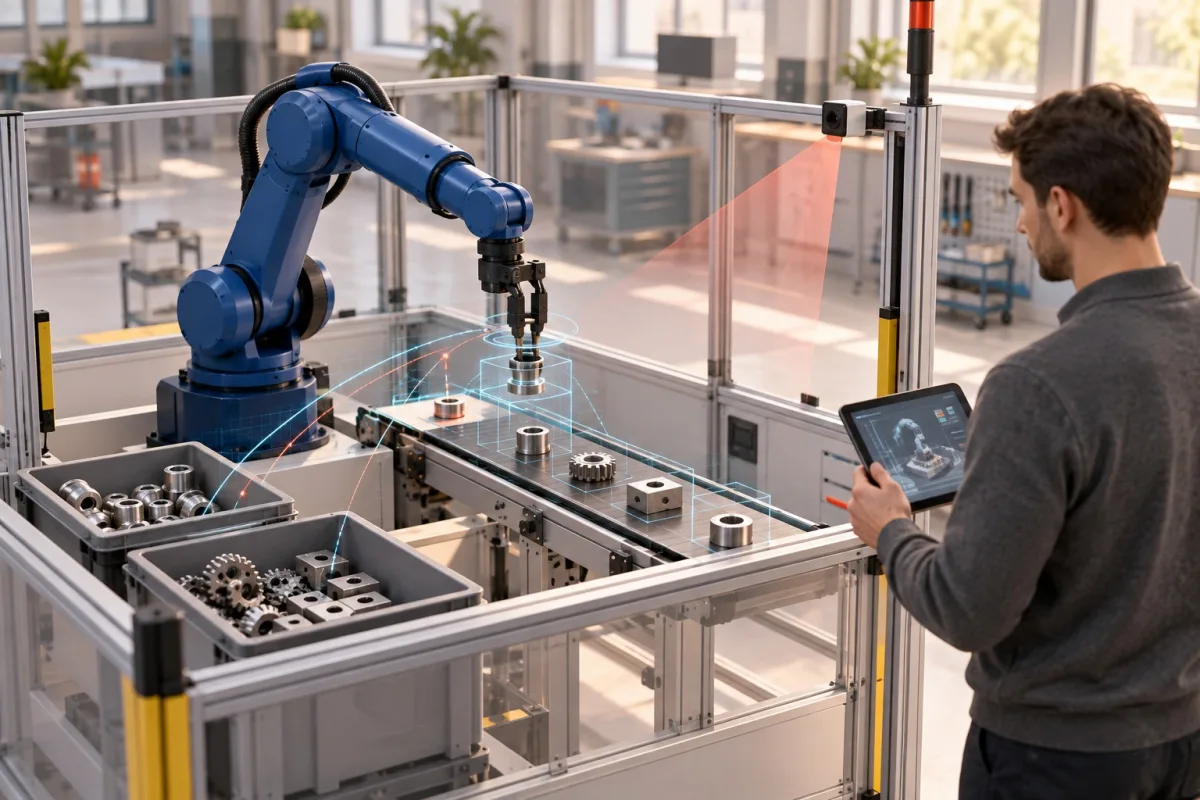
Our hypothetical test cell sorts three part shapes. An unfamiliar part is set aside and flagged for review. Success would mean meeting an agreed accuracy target with recorded interventions, rather than delivering an impressive demonstration.
Things to consider
No hands-on equipment or product test. Provider examples do not establish a general productivity gain. Production deployment needs an implementation assessed by qualified specialists for the particular machine and environment.
Read next

Your first automation: start small and verify
A repeatable workflow with clear limits and failure paths.
AI automations with approval: draft first, act afterwards
Create a reviewable boundary between an AI suggestion and an external action.

Agent Memory Repo: reviewable memory for AI agents
Recurring project knowledge can make the next session easier. A small pilot shows which information helps and how to keep it current.
Was this article helpful?
Your feedback helps us improve our articles.
Votes are counted per language version. Repeat voting is limited; totals do not necessarily represent distinct people. Privacy